Built Intelligence · Public Realm & Development · Council projects
Staged Active Recreation: How Councils Can Build the Park Without Funding Everything on Day One
A council does not need to choose between a tiny project now and a complete destination years later. A staged recreation plan can create a useful first asset while protecting the site, interfaces and business case for later growth.
Apollo NZ Global EditorialPublished 2026-10-07Project intelligence
Editorial guidance — final product, engineering, compliance and site requirements are confirmed for the actual project.
01
1. Start with the final ambition, even if only phase one is funded
The first capital release should be planned against a credible long-term picture. That does not mean designing every future feature in detail. It means knowing whether the site could eventually become a neighbourhood flow park, a mixed STREET and FLOW facility or a larger PARK destination.
Without that long-term view, phase one can accidentally consume the best expansion area, create paths that need to be removed or place services where later activity zones should go.
A simple concept plan showing current works, protected future space and likely connections is enough to make staging much more disciplined.
02
2. Choose a first phase that is complete enough to succeed
A first phase should not feel like an unfinished construction site. It needs a useful riding experience, safe access, understandable circulation and the minimum amenities required for the intended users.
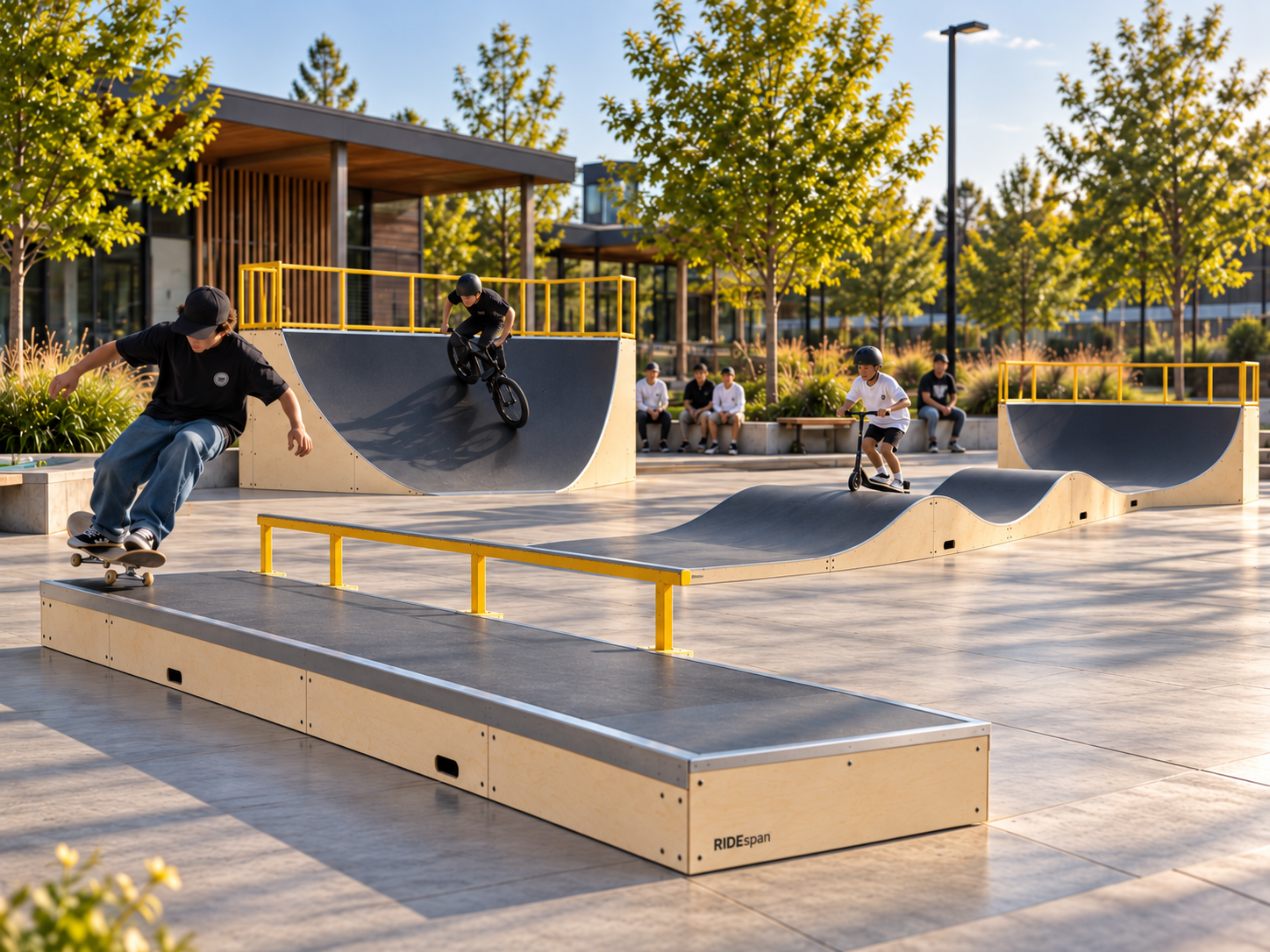
For some sites that may be a compact FLOW configuration. Others may justify a STREET line or a smaller PUMP circuit. The correct first phase depends on the local recreation gap and the site, not which equipment is easiest to buy.
Opening a coherent smaller project can also provide better evidence of real participation than leaving a large underdeveloped area waiting for future funding.
03
3. Use participation and operation as triggers for expansion
Future phases should be linked to information the council can observe: participation, peak-use crowding, age mix, demand for new disciplines, maintenance performance, complaints and community programming.
A trigger might be sustained peak-period queuing, strong demand from a BMX or skate group, or successful school/community programming that justifies a second activity zone.
This makes later funding requests easier to explain because the next stage responds to measured use rather than only the original forecast.
04
4. Protect the expensive interfaces early
The cheapest time to allow for future lighting, drainage, paths, power, maintenance access and site expansion is before the first stage is landscaped and completed.
That does not mean installing every future service immediately. It can mean providing conduit, preserving a drainage route, locating a path on the correct alignment or keeping a clear access corridor.
Small early decisions can avoid substantial rework when the next activity system is funded.
05
5. Keep technical evidence gates at every stage
A staged project should not lower the standard of technical review. Each phase still needs exact product construction, anchoring, surface, standards, warranty, maintenance and spare-parts information where relevant.
If a later phase uses a different RIDEspan family, its evidence should be assessed independently. A compliant or well-documented PUMP system does not automatically prove the technical suitability of a new STREET or SKILLS product.
The evidence register therefore grows with the park while remaining tied to each subsystem.
06
6. Budget for ownership, not only expansion
Capital staging is only useful if the owner can maintain the assets already installed. Inspection, cleaning, surface or panel replacement, hardware, drainage and surrounding landscape all need ongoing resources.
A larger phase-two project should not be approved without understanding how phase one has performed in maintenance and operations. That information can improve both the next procurement and the long-term asset plan.
The strongest staged programme therefore combines capital planning with lifecycle records. It builds only when the organisation can operate what it already owns.
Essential site functions work without analytics. With your permission, Apollo uses analytics to understand which products, guides and project pathways are useful. Analytics stays off until you allow it.