
Apollo NZ Global

Built Intelligence · Sports & Recreation · Pump tracks

Pump Track vs Bike Skills Park: They Teach Different Things

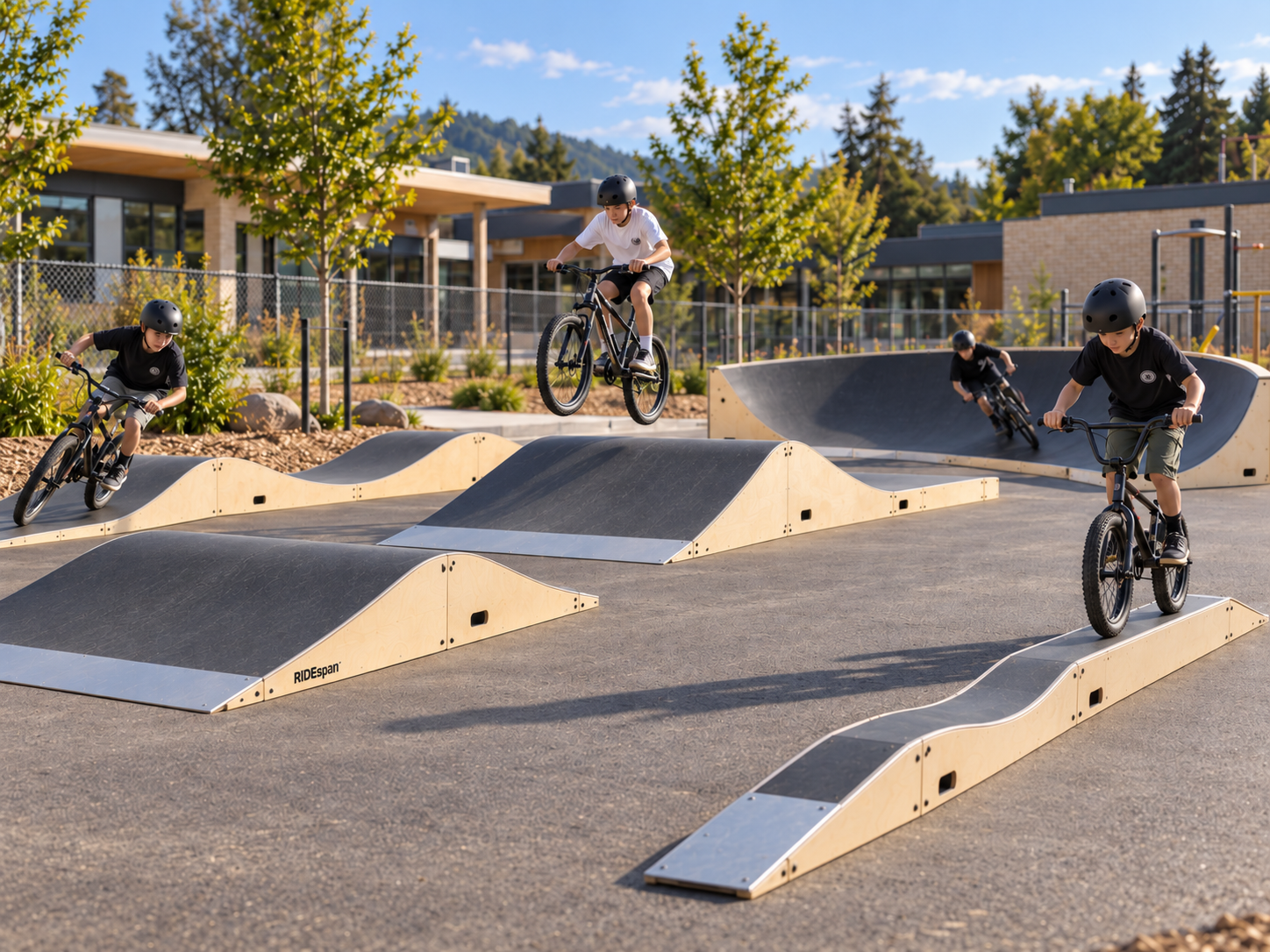
Pump tracks and bike-skills parks are often grouped together because both involve bikes and progression. They are not interchangeable. A pump track develops continuous movement, rhythm and cornering. A skills park can isolate specific techniques such as drops, balance, line choice and jump progression.

Apollo NZ Global EditorialPublished 2026-10-07Project intelligence
Editorial guidance — final product, engineering, compliance and site requirements are confirmed for the actual project.
Pump Track vs Bike Skills Park: They Teach Different Things
01

1. A pump track is a continuous movement system

A pump track is designed around linked rollers, turns and transitions that reward carrying momentum through body movement rather than repeated pedalling. Riders learn rhythm, balance, cornering and how to read the line ahead.

Because the circuit is continuous, circulation is part of the product. Entry, exit, waiting and one-way riding behaviour need to work together. The facility is strongest when riders can repeat laps and gradually improve smoothness and speed.

This makes PUMP especially useful where the brief is broad wheeled recreation and repeated movement rather than one isolated technical skill.

02

2. A skills park can isolate and repeat a technique

Bike-skills facilities can break riding down into specific challenges: rollers, balance lines, berm-style turns, drops, tabletops, technical obstacles and progression features. Riders can repeat one element without completing a whole circuit.

That is valuable for coaching, beginner progression and MTB/BMX programmes where the goal is to prepare riders for more complex terrain. A rider might practise a small drop repeatedly before moving to a larger version, or work on balance and line choice at slow speed.

The layout therefore needs more than a collection of bike obstacles. It needs a logical sequence from low consequence to greater challenge.

03

3. The user group should decide which pathway leads

If the project wants bikes, scooters, skateboards and balance bikes sharing one continuous recreation facility, a pump-track pathway may be the stronger starting point. If the main users are BMX and mountain-bike riders developing specific technical abilities, SKILLS should lead.

Schools may value a compact pump circuit for broad participation, while a bike club or trail destination may value progression features that link directly to coaching or off-road riding. Councils can need both if the catchment includes beginners and established riders.

The mistake is to choose from photographs before deciding what users are meant to learn and how they will move through the site.

04

4. The two systems can be stronger together

A larger active-recreation park can use PUMP and SKILLS as complementary zones. Riders can warm up and build rhythm on a pump circuit, then move into technical progression. Beginners can remain in lower-consequence areas while more experienced riders use advanced features.

That combination also reduces pressure on one facility to serve every need. The pump track does not need to become a technical obstacle course, and the skills zone does not need to provide continuous mixed-user flow.

RIDEspan PARK is the appropriate planning layer when several activity systems share circulation, seating, shade, bike parking, lighting and supervision.

05

5. Site planning changes with the activity

Pump tracks need a coherent loop or riding line plus entry, exit and waiting space. Skills areas need approach distance, recovery space and separation between features that may operate at different speeds.

Spectators and coaching positions also change. A skills park may benefit from clear viewing of one training feature, while a pump track benefits from wider visibility over the entire rider flow.

Before selecting equipment, map rider direction, waiting, crossing points, beginner areas, spectator positions and any link to trails or other recreation.

06

6. Keep SKILLS claims controlled until the exact range is qualified

RIDEspan PUMP is an established pathway. The broader SKILLS family is still being technically qualified. The planning concept is clear, but exact manufactured rollers, jumps, drops, balance modules, geometry and standards should not be treated as verified until the supplier evidence is received.

That distinction is useful rather than limiting. It allows a project team to plan the site, progression model and future activity mix now while keeping the eventual product schedule evidence-controlled.

Use the RIDEspan selector to decide which system should lead, then move into exact technical review when the project brief is defined.

07

7. Plan supervision and progression before combining zones

Where a pump circuit and skills features share a site, locate their entrances and waiting areas so riders are not required to cross a faster moving line to reach a beginner feature. Separate approach and run-out space for technical obstacles should be considered alongside the circulation of families and spectators.

Set out how users progress: balance and entry-level control, rhythm and cornering, then technical features suited to experience. Schools and clubs may use a supervised session model, while open public facilities need straightforward wayfinding and clear sightlines even when no coach is present.

An early plan should identify the local operator, inspection responsibility, emergency access, any equipment restrictions and the process for closing an unsafe feature. These decisions help define the appropriate final product schedule without presenting unverified RIDEspan SKILLS modules as approved equipment.

Move from intelligence to project

Apply the thinking to the actual brief.

Open RIDEspan SKILLS Send a project brief
Project